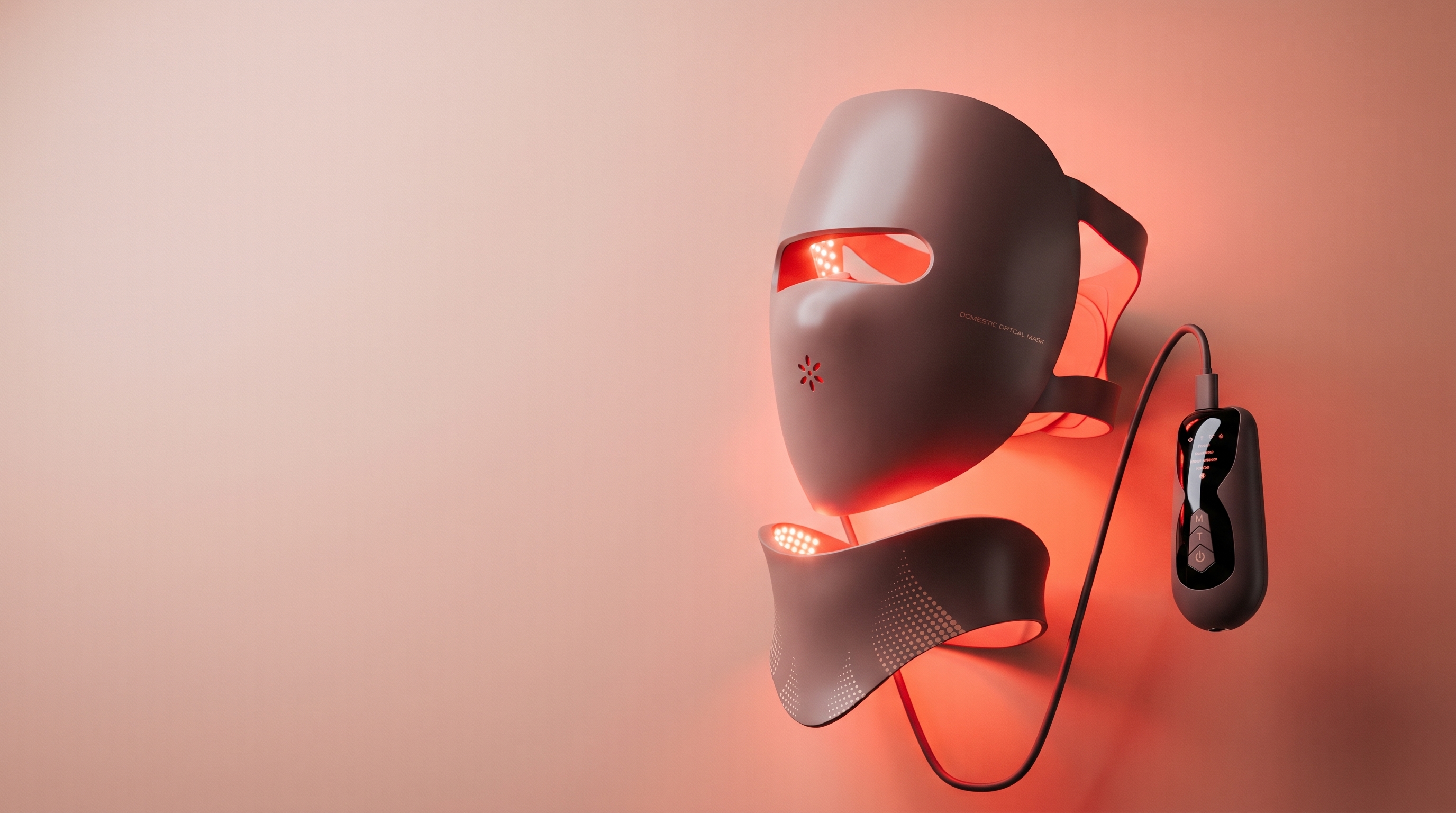
Do At-Home LED Masks Work? What the Research Actually Says
The short answer: Research on red and near-infrared light suggests that some studied devices and protocols can improve aspects of skin appearance. That does not prove that every home LED mask works equally well—or that a particular mask will deliver a visible change for you. Study quality, device settings, and individual suitability matter.
If you are considering a mask, the useful question is not simply “Does LED work?” It is “What evidence supports this device, for the result I am expecting?” Here is how to read the research without turning it into a miracle promise.
What has actually been studied?
Researchers have investigated light-based devices for a range of skin applications. For cosmetic appearance, red and near-infrared wavelengths feature in the literature. A 2018 systematic review by Jagdeo and colleagues examined 31 randomized controlled trials across several dermatologic uses. It rated the evidence for skin rejuvenation as grade C under its grading approach and identified limitations including small groups, missing blinding or sham controls, and varied settings.[1]
A later review by Glass described encouraging evidence in the wider field of photobiomodulation, while highlighting methodological flaws, small study populations, and industry funding. It also questioned whether LED sources produce effects comparable to the laser systems used in much of the higher-quality research.[2]
These reviews support a cautious conclusion: there is research worth taking seriously, but it is not a blank check for every product claim. They are not trials of the Aura Ray mask.
Why a wavelength match is not enough
A wavelength tells you something about the light, but not the whole exposure. Output at the skin, distance, session duration, pulsing, treatment schedule, and the area covered can differ. A study using one red-light device for a particular protocol cannot automatically validate another mask simply because both advertise red light.
The same caution applies to outcomes. A change recorded by an instrument, a clinician's assessment, and a participant saying their skin looks better are different measurements. A useful study explains what it measured and what comparison it used.
What does this mean for Aura Ray's four modes?
Aura Ray's brand-supplied settings are:
- Calm: green 525 nm.
- Brighten: yellow 590 nm.
- Rejuvenate: red 660 nm.
- Tighten: red 660 nm plus near-infrared 850 nm.
These are the product's mode names and specified wavelengths, not independent proof of their promised-sounding names. The sources cited here do not establish equal evidence for all four Aura Ray modes, nor do they validate results from the neck attachment. We have not been supplied a clinical trial of this exact Aura Ray device for this article.
It would therefore be misleading to borrow an improvement percentage from an unrelated study and present it as an Aura Ray result. This guide does not do that.
How soon should I expect a visible difference?
There is no evidence-based, Aura Ray-specific deadline we can promise. Research protocols differ, and studies often observe participants over multiple weeks rather than one session. That does not justify promising your result in a set number of days or using a fixed timeline as a guarantee.
Individual results vary. Some people may notice little or no visible change. Lighting, hydration, other skincare, and natural fluctuations also influence how skin looks. Use the device only as instructed; longer or more frequent sessions are not a shortcut to a guaranteed outcome.
Is an at-home mask the same as an in-office service?
No. Equipment, settings, supervision, and the purpose of the service may differ. A home mask offers the convenience of use at home, but convenience is not evidence of equivalent results. A price comparison with a professional service should not imply that one replaces the other.
If your goal is to address a skin condition or an unexplained change, seek professional assessment rather than relying on a cosmetic device or a blog.
What about safety?
Home use does not mean universal suitability. The American Academy of Dermatology recommends discussing red-light use with a dermatologist. It highlights light-sensitive conditions, medication interactions, eye-protection instructions, and the possibility of hyperpigmentation in darker skin tones.[3]
Read our LED mask safety guide before starting. The supplied manual and professional guidance for your circumstances take precedence over a general routine.
When might a mask fit your routine?
It may be worth considering as an optional skincare purchase if you understand the uncertainty, have resolved safety questions, and can follow its instructions without expecting dramatic or guaranteed changes. If you are seeking an instant transformation, a replacement for sunscreen, or an alternative to evaluation of a skin concern, reset those expectations first.
Common questions, answered directly
Does more LED light mean better results?
No simple comparison works that way. LED count, advertised output, and time are not standalone scores for effectiveness. Follow the instructions rather than increasing exposure.
Do before-and-after photos prove that a mask works?
No. They can document a person's experience, but lighting, skincare changes, and other factors can affect the comparison. Read our guide to reviews and progress photos.
Should I choose the face mask or the face-and-neck bundle?
Choose by desired coverage. The Essential is Aura Ray's face-mask kit; The Ultimate Glow Bundle adds a separate neck and décolletage attachment. Additional coverage does not establish stronger results. See the set comparison.
Your next steps
- Use the seven-point LED mask buying checklist.
- Understand Aura Ray's setup and routine.
- Review the current Aura Ray set details and prices.
Sources and evidence limits
- Jagdeo J and colleagues. Light-emitting diodes in dermatology: A systematic review of randomized controlled trials. Lasers in Surgery and Medicine (2018). Review of different devices and applications, not Aura Ray testing.
- Glass GE. Photobiomodulation: The Clinical Applications of Low-Level Light Therapy (2021). Review of the broader literature, including limitations of the evidence.
- American Academy of Dermatology: Is red light therapy right for your skin? Consumer guidance on suitability and precautions.
Written by Aura Ray Beauty Editorial, the brand selling the products discussed. This is an evidence-informed overview, not a new systematic review, independent device test, or clinician-reviewed medical recommendation. Product specifications are supplied by the brand. Educational information only; individual results vary.
Written by Aura Ray Beauty Editorial